
Creative activities
Simple projects made from natural materials
Easy building and craft ideas for families, chosen for the joy of making rather than perfect results. Each project notes the age it suits and how much adult help it needs.

Activities by age
Pathways for each stage
Each tier lists a suggested age range and whether an adult should stay close by while children work.

Ages 1 to 3 · Adult nearby
Sensory bins and stacking
Fill a shallow wooden tray with large pine cones and smooth blocks. Let toddlers pour, stack, and tap. Supervise closely, as small parts are not suitable for this age.
Ages 3 to 6 · Light supervision
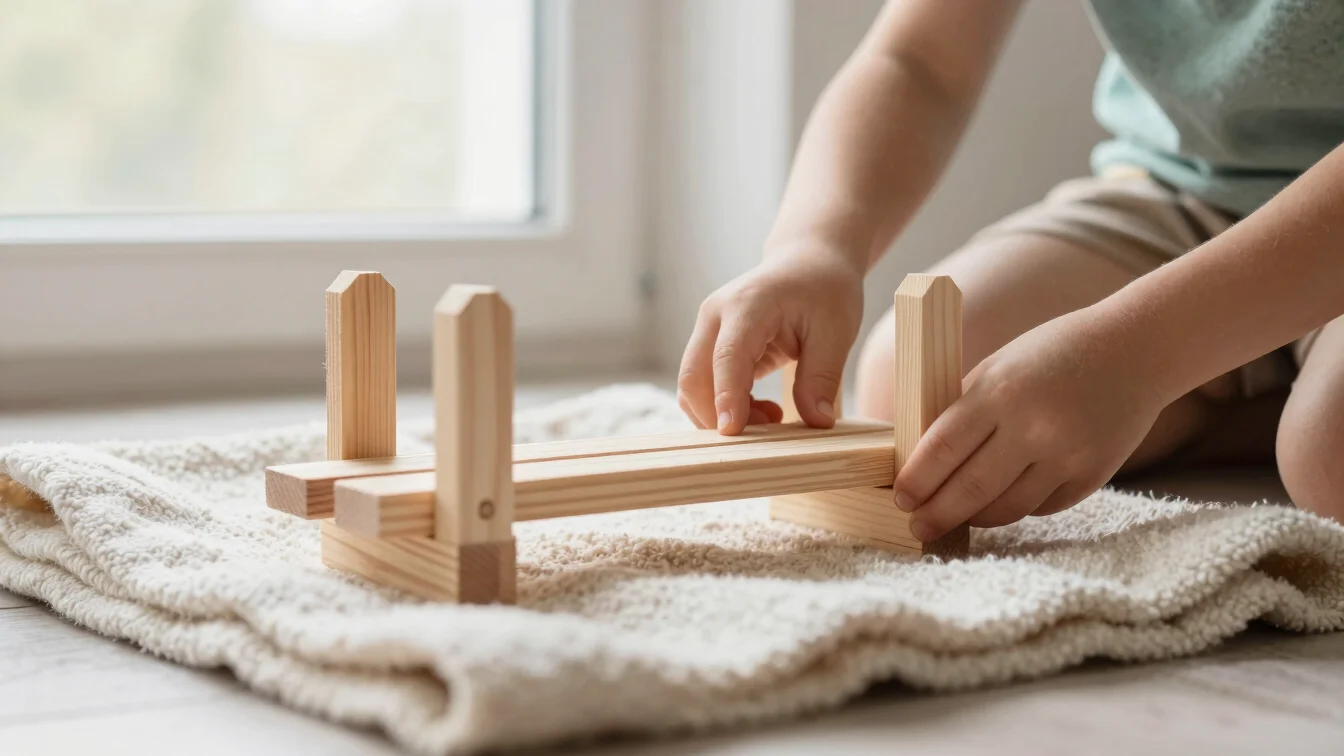
Bridges and simple towers
Offer a set of blocks and a few wooden dowels. Ask what the child wants to build, then step back. Check that pieces are large and sanded smooth.

Ages 7 and up · Adult guidance
Sanding and small carpentry
Use fine-grit paper and a bench vise. An adult should demonstrate tool handling and remain in the room for every cut or sanding session.
Before you begin
Safety checks for every project
1. Choose untreated, unfinished wood and natural pigments labelled as non-toxic. Discard any piece with splinters, cracks, or loose parts.
2. Confirm that every component is larger than a child's mouth or sized for the stated age. Keep small pieces out of reach of children under three.
3. Keep an adult within sight for any activity involving saws, knives, glue, heat, or sanding. Demonstrate tool handling before a child tries it.
4. Work on a clean, well-lit surface, and tidy tools and offcuts before stepping away.